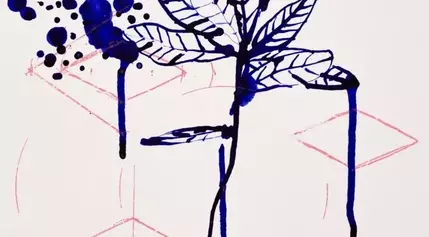
French-Gabonese artist Myriam Mihindou intertwines the personal and the political
2025-11-03
42.1K
2.9K
1.3K
Myriam Mihindou: Reclaiming Artistic Voice Through Collaboration
Myriam Mihindou, a French-Gabonese artist, has overcome personal challenges to establish herself as a key figure in contemporary French and African diaspora art. Her multidisciplinary practice, which often incorporates collaboration, has earned her recognition through a trio of major French exhibitions this autumn.
Unlocking the Artistic Potential of Collaboration
Overcoming Aphasia and Finding Her Voice
When Myriam Mihindou was in her 20s, she suffered from aphasia, a condition that impaired her ability to speak or understand speech. However, her journey of rehabilitation not only helped her regain her literal voice but also inspired her to develop a unique artistic practice that places collaboration at its core. Mihindou's early video installation, "Folle" ("Mad Woman"), serves as a powerful metaphor for overcoming one's fears, with the viewer witnessing the artist's feet nervously exploring the cracks between paving stones before ultimately taking a leap of faith.
Exploring the Intersection of Architecture, Art, and Personal Narratives
Born in Libreville, Gabon, to a French Catholic mother and a Gabonese animist, political activist father, Mihindou's childhood was marked by both rich inspiration and profound turmoil. Her father's opposition to the regime of President Omar Bongo Ondimba led to his repeated arrests and imprisonment, prompting Mihindou to flee to France in the 1980s. In Bordeaux, she studied the architecture of the French colonial buildings she had witnessed being demolished in her homeland, a process that sparked her anger but also her desire to reconcile the cultural heritage produced by the same system that oppressed her family.
Weaving Personal and Political Narratives
Mihindou's artistic practice often intertwines personal stories with political subtext, as exemplified by her 2004 film "La Colonne Vide" ("The Empty Column"), which pays homage to her late sister. The work features a double image of the artist, with one figure moving in sync with the other, creating a subtle representation of the artist and her sister as personal monuments. This blending of the personal and the political is a recurring theme in Mihindou's work, reflecting her desire to address broader social concerns without aligning herself with any specific political movement or party.
Challenging the Conventions of Colonial Trophy Museums
Mihindou's exhibition "Ilimb, the Essence of Tears" at the Musée du Quai Branly in Paris explores themes of death and mourning, paying tribute to the Punu mourners of Gabon, the ethnic group to which she belongs. Her works, such as "Moñu" and "Nzumbili," not only demonstrate her technical and conceptual sophistication but also challenge the museum's conservation techniques and obsession with authenticity, inviting visitors to reconsider the colonial legacy embedded within the institution.
Collaborative Creativity and the Power of Invention
Mihindou's collaborative approach is further exemplified in her installation "Lève le doigt quand tu parles" ("Raise your hand when you speak"), presented at the 2024 Biennale de Lyon. This work, featuring cement casts of women's arms pointing towards the sky, speaks to the invisibility of women's roles and their demand to be heard. Mihindou describes the collaborative process of creating this piece as a journey of discovery, where each member of the crew contributed their unique intelligence and creativity, leading to moments of laughter, joy, and the collective invention of something truly remarkable.Myriam Mihindou's artistic journey is a testament to the power of collaboration, personal narratives, and the ability to reclaim one's voice in the face of adversity. Her multifaceted practice, which spans video installations, sculptural works, and immersive experiences, has earned her recognition as a key figure in contemporary French and African diaspora art, solidifying her reputation through a series of major exhibitions in 2023 and 2024.